PMS

Phelan-McDermid Syndrome
Image of a middle-aged man playing soccer with two small children in a field. The child to the right of the man is a boy and he has kicked a white soccer ball to the man. The child to the left of the man is a girl and she is stepping towards the ball.
DISEASE OVERVIEW

PMS is a severe neurodevelopmental disease caused by insufficient expression of the SHANK3 gene in the neurons of the brain.1

Patients can experience a wide range of medical, intellectual and behavioural challenges, including life-long intellectual and physical disability. There are no available treatments for patients with Phelan-McDermid Syndrome.2

PYC has developed PYC-002, a disease-modifying therapeutic candidate for PMS that addresses the root cause of the condition. PYC-002 is currently in pre-clinical studies.


PMS at a glance

An overview of key disease information.
An icon of a navy blue globe with an orange stand.

An urgent need to create treatments

PMS affects 1 in every 8,000–15,000 people.3

An icon of two strands of RNA next to each other. The strand on the left is navy blue and the strand on the right is orange. Both strand are otherwise identical. They are both gently curved vertical lines with short horizontal lines staggered downwards like the rungs of a ladder.

PMS is a monogenic haploinsufficient disease

It is caused by the insufficiency of one gene, SHANK3, in which a mutation in (or deletion of) one copy of that gene results in PMS.1

An icon of a navy blue brain with an image of a navy blue and orange clock across the centre-bottom area of the brain.

Patients with PMS experience life-long disability impacting both patients and carers

PMS is associated with a variety of symptoms including intellectual disability, developmental delays, autism-spectrum features, seizures, and hypotonia.2

An icon of a navy blue double-helix of DNA tilted on an angle from the top right corner to the bottom left corner. This DNA has a clear circle with an orange outline around it.

PYC’s therapy, PYC-002, represents a potentially disease-modifying therapeutic candidate for patients with PMS

PYC-002 targets the root cause of PMS, SHANK3 protein insufficiency, by restoring SHANK3 protein to healthy levels resulting in the rescue of neuronal function.

An icon of a navy blue and orange clipboard with ticks on it next to a strand of orange DNA.

Drug development stage

PYC-002 is at the IND-enabling stage, with first-in-human trials anticipated in 1H 2027.

PMS at the genetic level

PMS is caused by reduced SHANK3 levels that impair communication between neurons
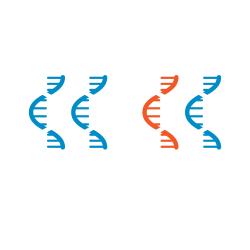
An icon of four DNA spirals organised into two sets of pairs. The DNA pairs on the left are both blue and white, and are titled 'Unaffected DNA'. One DNA pair on the right is orange and white while the other is blue and white. This set of DNA is titled 'PMS patient DNA'.

Genetic mutation

PMS patients have a mutation in, or deletion of, one of their two copies of the SHANK3 gene – this mutation is present in all the cells in their body, but it mainly affects the function of the neuronal cells in the brain.4

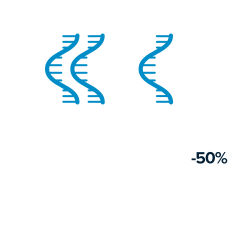
An icon of two sets of RNA pairs side-by-side. The set on the left is blue and is titled 'Unaffected person'. There is a white arrow below this pair pointing down towards two strands of SHANK3 protein chains. On the right there is only 1 blue strand and the the mutated gene doesn't produce RNA. It is titled 'PMS patient'. There is a white arrow below this 'pair' pointing down towards one strand of SHANK3 protein chain and a white bubble containing the text '-50%'.

Decreased protein production

The SHANK3 gene mutation or deletion leads to approximately half of the SHANK3 protein production required for neurons to function normally. PYC’s therapeutic candidate, PYC-002, seeks to increase protein expression from the healthy copy of the SHANK3 gene to boost SHANK3 protein production towards healthy levels that allow normal neuronal function.4

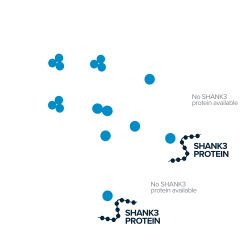
An infographic of the synapse (space) between two neurons. The neuron on the left (pre-synaptic neuron) contains three white sacks (vesicles) that have three blue circles (neurotransmitters) in each of them. The blue circles are being released by the pre-synaptic neuron into, and across, the synaptic cleft (gap between the cells) to the neuron on the right (post-synaptic neuron). There is a white arrow communicating the direction of the blue circles from left to right and a title that reads 'Reduced neuronal communication'. The 'receiving' post-synaptic neuron is shown with only half the 'SHANK3' protein (depicted by a dark blue zig-zag line with nodules at each point and labelled 'SHANK3 protein') connected to the receptors. Only two of the four receptors (with the SHANK3 protein attached) can bind to the neurotransmitters and bring them into the post-synaptic cell. Grey text next to the unlinked receptors reads 'No SHANK3 protein available'

Cellular changes

Underproduction of the SHANK3 protein causes alterations in brain function, with reduced neuronal communication and abnormal synaptic structure and function.4


PYC-002 has the disease-modifying potential to halt neuronal impairments and arrest, at least, disease progression – it’s a potentially life-changing therapeutic candidate.

An infographic of a white brain with a white and orange clock under it.

Patient symptoms

With a reduced production of the SHANK3 protein, PMS patients can experience intellectual disability, developmental delays and absent or delayed speech, low or weak muscle tone (hypotonia), autism-spectrum features and seizures.2


At PYC, we aim to halt the progression of symptoms in PMS patients with our drug candidate PYC-002 and greatly improve quality of life for patients.

The human impact of PMS

PMS is a severe neurodevelopmental disease that causes life-long disability, beginning in childhood.2
A photo of a baby leaning back in a woman's lap and smiling. The woman is looking down towards the baby and is smiling also.

Early childhood signs

Common signs of PMS include low or weak muscle tone (hypotonia), poor head control and a weak cry.2

Female toddler with a messy ponytail and yellow t-shirt sits at a table and looks intently at her colourful building block creation, showcasing focus and creativity.

Altered brain development

Patients can experience developmental and speech delays, and intellectual disability.2

An image of a baby sitting in a woman's lap and her hands are holding the baby's feet.

Skills regression

Patients might experience intellectual and motor skills regressions during childhood.2

PYC-002 is a potentially life-changing treatment

PYC-002 is a precision RNA therapeutic that targets the underlying SHANK3 gene mutation to correct disease in PMS patients. There are currently no known disease-modifying treatments for PMS in clinical development.

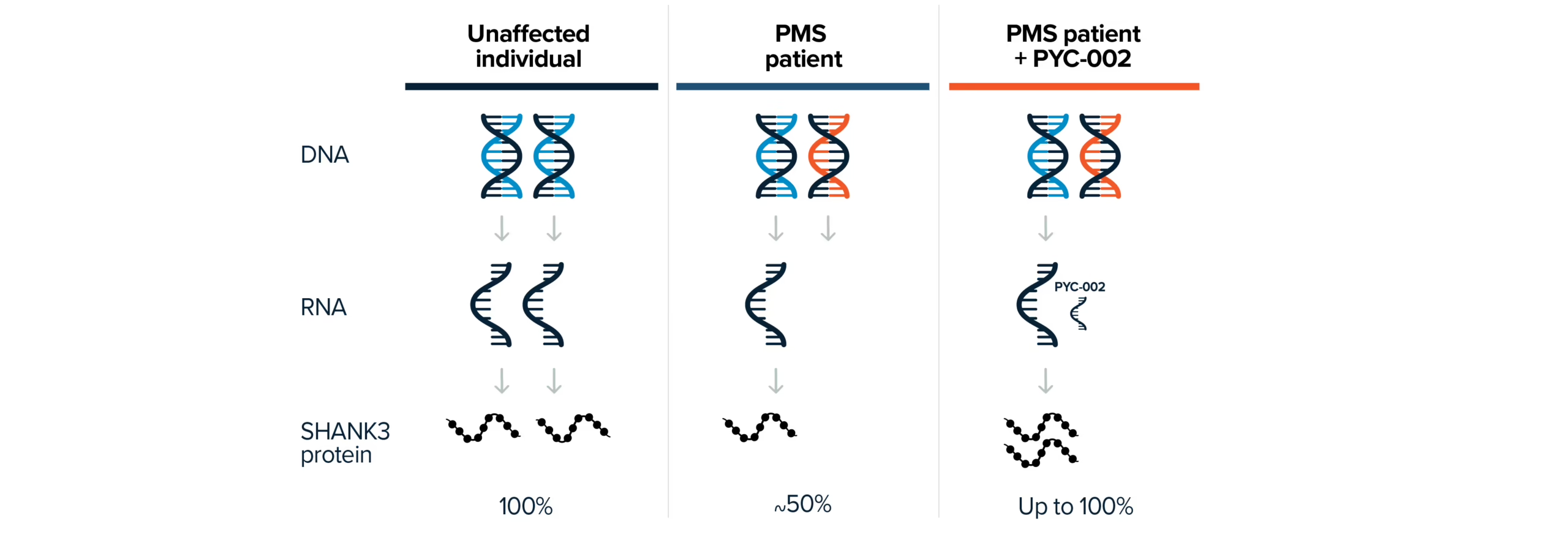
PYC-002 targets the root cause of PMS, SHANK3 protein insufficiency, by restoring SHANK3 protein to healthy levels.

A table that contains three columns titled 'Unaffected individual', 'PMS patient' and 'PMS patient + PYC-002' from left to right. In the 'Unaffected individual' column there are two dark blue + light blue DNA helixes (representing healthy DNA) which flow into two strands of dark blue RNA (via two grey downward arrows) and thes flow to into two strands of SHANK3 protein, these are labelled '100%'. In the 'PMS patient' column there is one dark blue + light blue DNA helix (healthy version) and one dark blue + orange DNA helix (representing the mutated/unhealthy version), in the second row only one strand of dark blue RNA flows from the healthy 'blue' DNA which leads to only one of SHANK3 protein, labelled '~50%'. In the 'PMS patient + PYC-002' column there is one dark blue + light blue DNA helix and one dark blue + orange DNA helix, only one strand of dark blue RNA flows from the healthy DNA with the PYC-002 candidate (shown as a smaller version of the RNA strand and titled 'PYC-002') this RNA strand flows to two strands of SHANK3 protein from the healthy RNA + PYC-002 candidate, these are labelled 'up to 100%', this shows that protein production increases back to 100% of the healthy levels with the PYC-002 candidate.

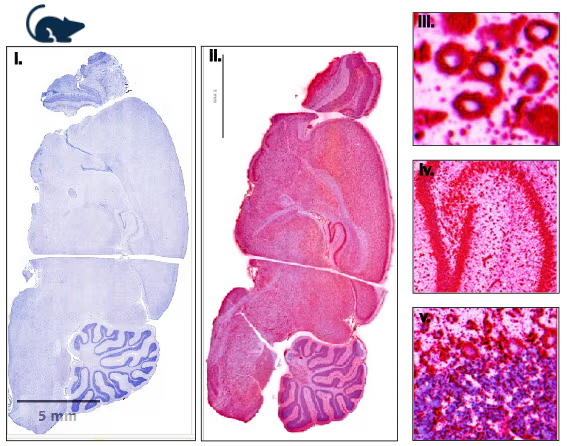
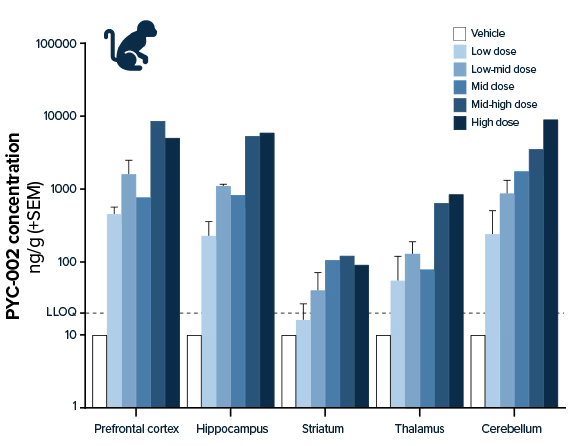
In pre-clinical studies, PYC-002, a naked 2’MOE, effectively reaches target neurons affected by PMS across various brain regions.5

[5:24 PM]Three illustrations of disease-relevant brain regions for Phelan-McDermid Syndrome in human, non-human primate (NHP), and rat brains with a colour-coded key. The regions highlighted in each brain illustration are the hippocampus in dark blue, the prefrontal cortex in blue, the striatum in yellow, the cerebellum in teal and the thalamus in purple. The brain illustrations are grey.
Disease-relevant brain regions for Phelan-McDermid Syndrome in human, non-human primate (NHP), and rat brains
A group of 5 images of segments of a rat brain showing distribution of PYC-002 in brains from Sprague-Dawley rats (Rattus norvegicus) treated with i. vehicle control or ii-v. low dose PYC-002 for 14 days. Samples stained with in situ hybridisation probe targeting PYC-002 ASO (red) and counter-stained with hematoxylin. i. and ii. Whole Brain, iii. Cortex, iv. Hippocampus, v. Cerebellum.
PYC-002 shows broad and even distribution in rat brain. Distribution of PYC-002 in brains from Sprague-Dawley rats (Rattus norvegicus) treated with i. vehicle control or ii-v. low dose PYC-002 for 14 days. Samples stained with in situ hybridisation probe targeting PYC-002 ASO (red) and counter-stained with hematoxylin. i. and ii. Whole Brain, iii. Cortex, iv. Hippocampus, v. Cerebellum.
Bar graph showing PYC-002 concentration in ng/g (+SEM) from 1 to 10000 on the y-axis across the 5 disease-relevant regions of the brain for Phelan-McDermid Syndrome on the x-axis (from left to right: pre-frontal cortex, hippocampus, striatum thalamus and cerebellum) in brain tissue samples from Cynomolgus monkeys (Macaca fascicularis) 28 days after treatment with PYC-002, assessed by hy-ELISA with colour-coded key: white for vehicle/control, light blue for low dose, mid-blue for low-mid dose, blue for mid dose, dark blue for mid-high dose and very dark blue for high dose.
PYC-002 distributes to disease-relevant brain regions in NHPs. Concentration of PYC-002 (ng drug per g tissue, mean + S.E.M.) in brain tissue samples from Cynomolgus monkeys (Macaca fascicularis) 28 days after treatment, assessed by hy-ELISA.

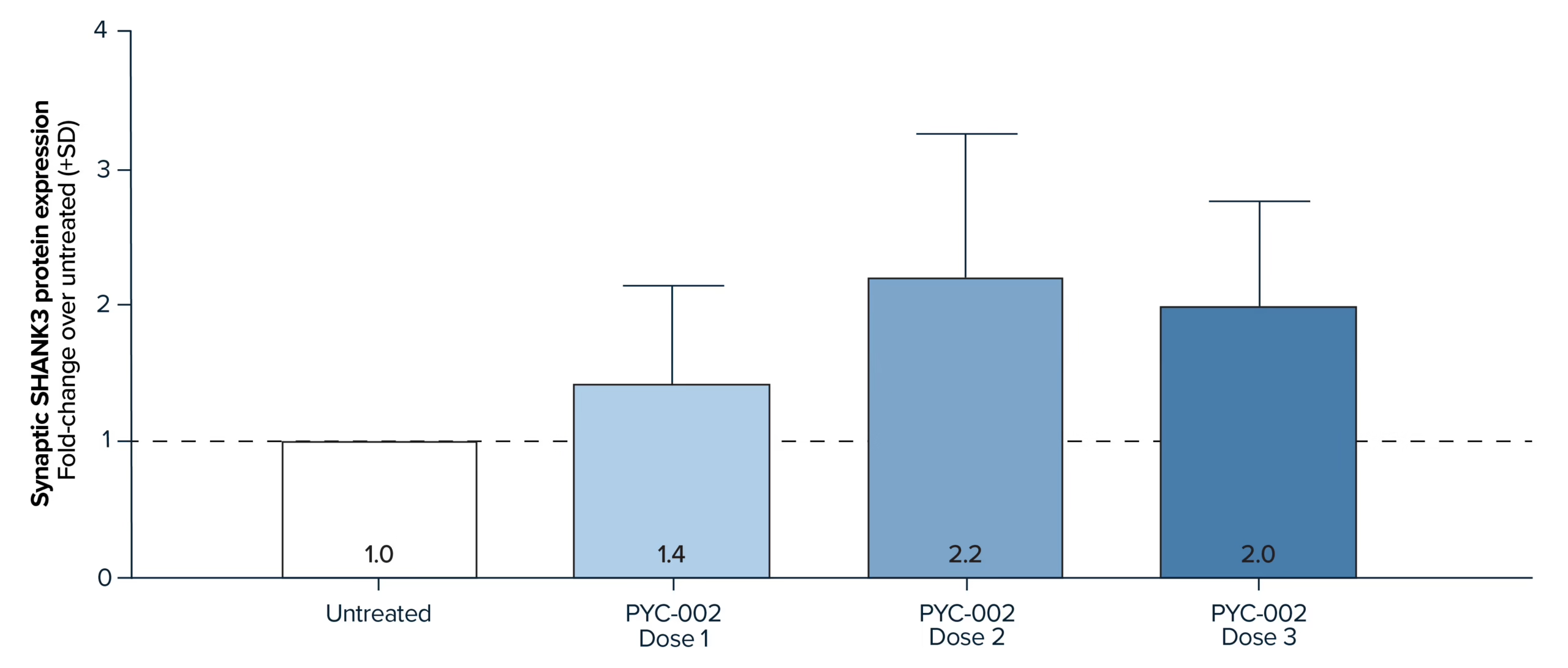
In-vitro studies demonstrate that PYC-002 has the ability to restore SHANK3 protein production back to normal (physiological) levels in a manner that is consistent with disease correction.5

A bar graph titled ‘Synaptic SHANK3 protein expression in PMS-affected neurons’. The y axis is titled ‘Fold-change over untreated (+SD)’. There are four bars in the graph, the left bar is titled ‘untreated’ and reaches a value on the y-axis of approximately 1.0. The second bar is titled ‘PYC-002 dose 1’ and reaches a value on the y-axis of approximately 1.4. The third bar is titled ‘PYC-002 dose 2’ and reaches a value on the y-axis of approximately 2.2 The fourth, right-most bar is titled ‘PYC-002 dose 3’ and reaches a value on the y-axis of approximately 2.0.
PYC-002 increases synaptic SHANK3 expression. Mean fold-change (+SD) of SHANK3 protein expression on 100 μm of neurite over untreated group after 21 days of PYC-002 gymnotic treatment of PMS patient-derived iPSC-neurons (n=2 biological replicates, each with 5 – 24 technical replicates), assessed by high content imaging.

Patients are our priority

An image of a female healthcare worker wearing a white coat and stethoscope who is seated at a desk. She has a pen and clipboard in hand and is smiling as she talks to a woman in casual clothes who is seated across from her.

Our commitment to patients

We believe it is essential to understand the people living with the genetic diseases that we are aiming to treat. At PYC, we make it a priority to collaborate with patients and caregivers across our development process – to ensure that our RNA therapeutics best meet their needs.

An image of a person in a white coat sitting down and holding a pen in their right hand and a clipboard in their left. In the background there is a person in plain clothes sitting next to them.

Our patient trials

At PYC, we conduct responsible patient trials to ensure that our treatments are safe and effective. These trials rely on patient volunteers and are crucial to the development of disease-modifying therapies for genetic diseases.

References

  1. Betancur, C. and J.D. Buxbaum, SHANK3 haploinsufficiency: a "common" but underdiagnosed highly penetrant monogenic cause of autism spectrum disorders. Mol Autism, 2013. 4(1): p. 17. ↩︎
  2. Landlust, A.M., et al., Parental perspectives on Phelan-McDermid syndrome: Results of a worldwide survey. Eur J Med Genet, 2023. 66(7): p. 104771. ↩︎
  3. Phelan-McDermid syndrome foundation. What is Phelan-McDermid syndrome? Causes, symptoms & treatment [internet]. Florida, USA: Phelan-McDermid syndrome foundation; 2022. Available from: https://pmsf.org/about-pms/ ↩︎
  4. Cochoy, D.M., et al., Phenotypic and functional analysis of SHANK3 stop mutations identified in individuals with ASD and/or ID. Mol Autism, 2015. 6: p. 23. ↩︎
  5. See 13/10/2025 ASX announcement: Phelan-McDermid syndrome – pre-clinical data support progression to human trials ↩︎
OUR PARTNERS

PYC is proud to partner with:

SUBSCRIBE

Receive our market updates


    A photo of a female scientist wearing a white lab coat and blue gloves in a lab. She is placing a test tube inside a centrifuge.